- Invisible Rules
- Posts
- Directional Authority: Selling the Future
Directional Authority: Selling the Future

Ujwal Arkalgud
February 24, 2026
TLDR;
The real reason your startup is stalling isn't a lack of features; it's a lack of Directional Authority. You are playing a logical game in a psychological arena, trying to sell a tool to people who are fundamentally governed by the invisible rule of "CYA" (Cover Your Ass). In a world where AI has commoditized efficiency, buyers aren't looking for better, they are looking for Safety. If you haven't told the buyer where the industry train is going, you’re just another vendor shouting from the platform.
In this issue, we’ll tackle:
The Directional Authority Gap: Why the incumbent wins by doing nothing.
The Train Station Strategy: How to redefine the purpose of the sale from tool to survival.
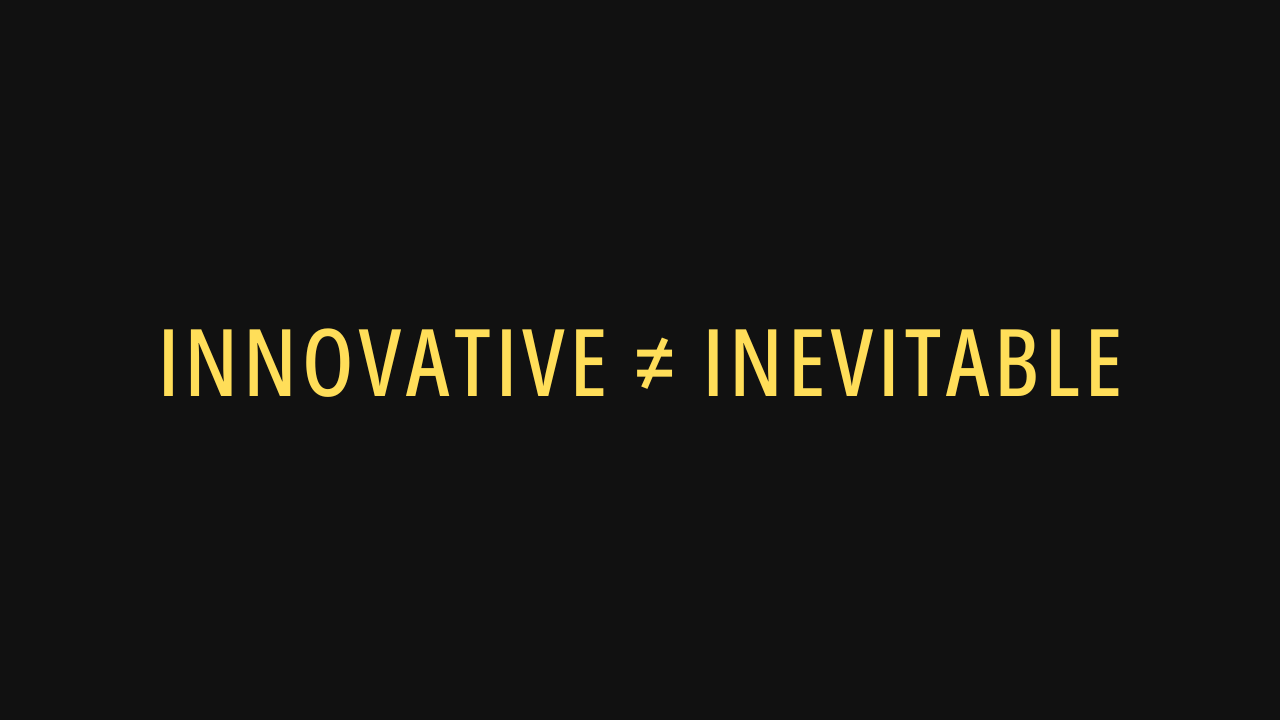
Pivoting from Innovative to Inevitable: The high-stakes shift in brand positioning.
Let’s dive right in.
The Most Expensive Assumption in B2B
Most founders believe that if they build a 10x better product, the market will eventually recognize the logic and switch. This is a beautiful, expensive lie.
In reality, your biggest competitor isn't the incumbent's feature list—it's the Default State. As an anthropologist, I look at the B2B sales floor as a tribal ecosystem governed by fear. When you move beyond the "crazy people" (innovators) and hit the early majority, the invisible rules of engagement shift:
Validation > Innovation: The buyer’s primary goal is self-protection.
Consensus = Security: If five people sign off on a bad decision, no one gets fired. If one person signs off on a bold decision that fails, they’re gone.

Gif by AppleTV on Giphy
If the buyer thinks the industry is staying where it is, the incumbent is the safest bet. Why would a director risk their career to move to a new platform if the current one is fine?
The Train Station Strategy: Selling the Inevitable
To break the status quo, you have to move from Attention-based tactics (look at me!) to Trust-based tactics (look at the industry).
You need to articulate that the industry is heading to a specific Train Station—a new reality shaped by AI, regulation, or cultural shifts—and that the incumbent is actually on a track to nowhere. When you do this, the purpose of the sale changes. It’s no longer about a tool; it’s about survival.
You are no longer the Innovative Choice (which screams risk to a mid-market Director). You are the Inevitable Choice (which screams safety). You stop selling the tool and start selling the transition.
If your growth has flatlined, you aren't failing at sales; you've just run out of innovators. You need to restart the engine by decoding the human layer of the safe buyer.
Run the Junior Circuit Strategy: Stop asking the VP why they didn't buy; they'll give you a logical excuse about budget. Go to the subordinates and ask: "What's the one thing your boss is worried about failing at this year?". That is your Shadow Constraint. If they’re worried about future-proofing, your train station narrative becomes their shield.
Shift Language from Features to Expectations: In your demos, stop showing the dashboard. Start saying: "Usually, when companies your size move to this model, the expectation from the C-suite is that you'll have navigated the AI transition by Q4. We’ve built the implementation to ensure you hit that milestone".
The Counterintuitive Poke: Lead with a misconception your buyers believe. Instead of leading with benefits, name the trade-off no one wants to admit. For example: "Everyone tells you the incumbent is the safe choice, but in a market moving this fast, 'standing still' is the highest-risk strategy you can take".
The Bottom Line: Truth is the Ultimate Differentiator
In a market flooded with storytellers and performance art, Directional Authority is your only real moat. Stop trying to be the sexy startup. Start being the Competent one that draws the map.
In the long run, the people who actually know where the industry is going are the only ones who get to own the market.
Provocative Question for You: Look at your last 5 lost deals. Was it actually a budget issue, or did you fail to provide enough Directional Authority for the buyer to risk their reputation on you? Are you still trying to be the cool choice in a room full of people who just want to not get fired?
Hit reply and let me know. I read every email.
P.S. My book, Invisible Rules: How to Outsmart the Entrepreneurial Game, is available for pre-order in March. It’s for founders who are tired of the “just scale faster” advice and want to understand the actual social mechanics of the game.
Keep Reading


Reply